Here's a little rant on a favorite topic of mine: intellectual honesty. A simple goal of this class is to get us all to recognize what counts as
good evidence and what counts as
bad evidence for a claim. I think we're getting better at that. But it's
not clear that we're caring about the difference once we figure it out.
Getting us to care is the real goal of this class. We should care about good evidence. We should care about it because it's what gets us closer to the truth. When we judge an argument to be overall good,
THE POWER OF LOGIC COMPELS US to believe the conclusion. If we like an arg, but still stubbornly disagree with its conclusion, we are just being
irrational.
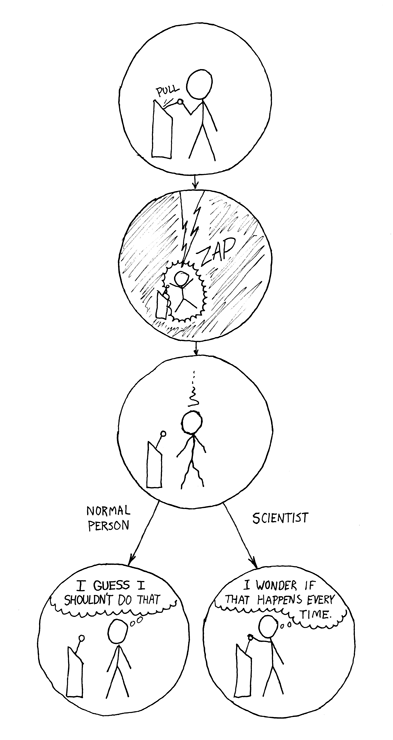
This means we should be open-minded. We should be willing to let new evidence change our current beliefs.
We should be open to the possibility that we might be wrong. This is how
Todd Glass puts it:
Here are the first two paragraphs of a
great article I read in the Fall on this:
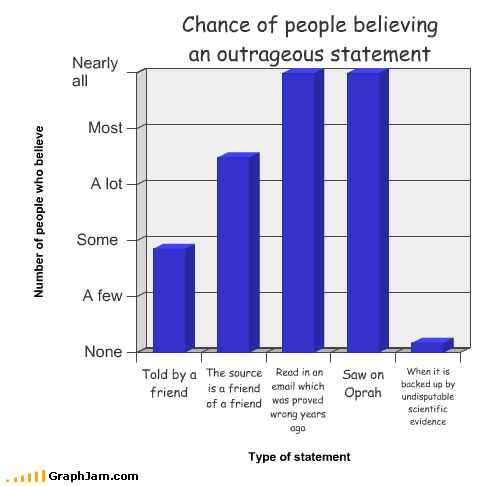
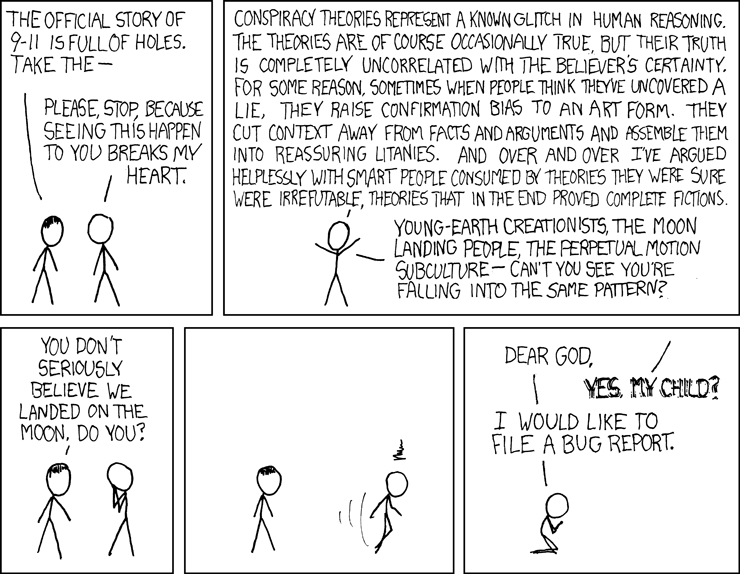
Last week, I jokingly asked a health club acquaintance whether he would change his mind about his choice for president if presented with sufficient facts that contradicted his present beliefs. He responded with utter confidence. "Absolutely not," he said. "No new facts will change my mind because I know that these facts are correct."
I was floored. In his brief rebuttal, he blindly demonstrated overconfidence in his own ideas and the inability to consider how new facts might alter a presently cherished opinion. Worse, he seemed unaware of how irrational his response might appear to others. It's clear, I thought, that carefully constructed arguments and presentation of irrefutable evidence will not change this man's mind.
Ironically, having extreme confidence in oneself is often a sign of ignorance. Remember, in many cases,
such stubborn certainty is unwarranted.




 OK, before we start rocking all night, perhaps we should come up with a name for our logic band. What's a good name for us?



 Posts
Posts

